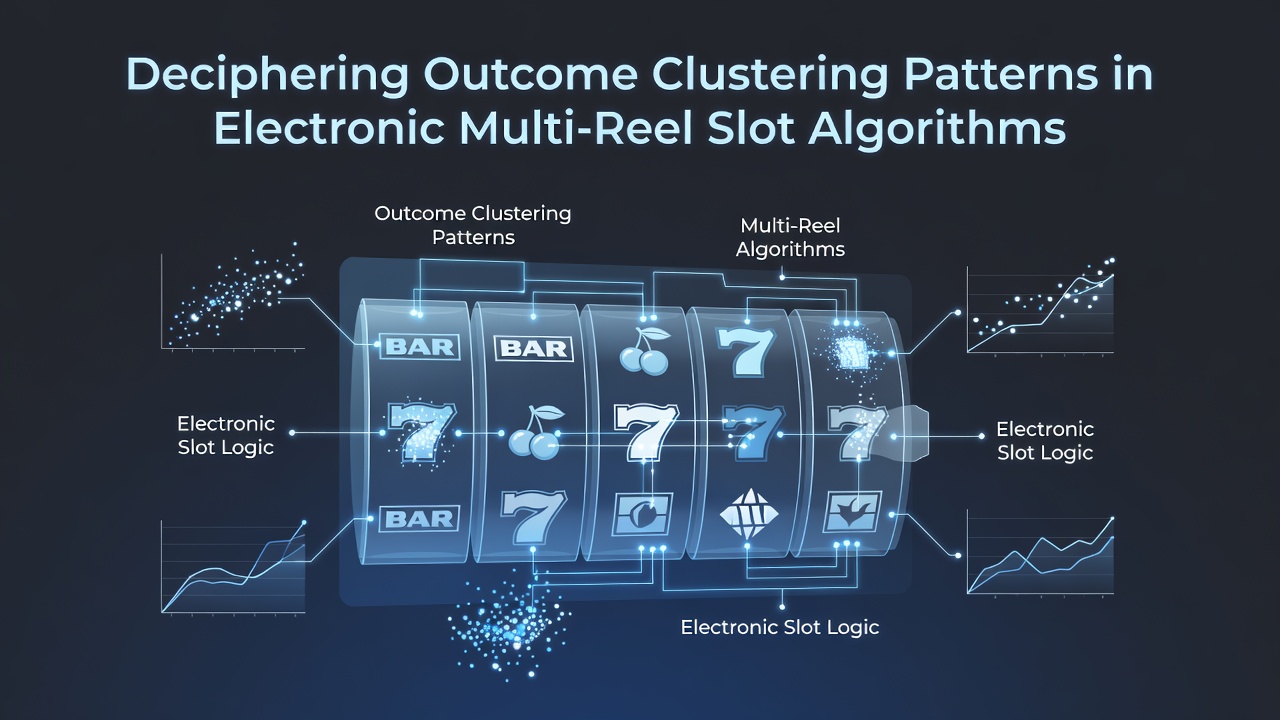
Statistical Mapping of Outcome Clusters in Multi-Reel Electronic Slot Systems
Electronic multi-reel slot algorithms generate thousands of symbol combinations each second through pseudorandom number generators, and researchers have examined how certain outcome sequences form visible clusters rather than distributing evenly across sessions. Data from independent testing laboratories shows that these clusters arise because RNG streams follow mathematical distributions where short-term repetitions occur even though long-term results remain balanced according to programmed return-to-player percentages.
Core Mechanics Behind Reel Algorithms
Modern slot systems rely on algorithms that map random values to reel positions using weighted tables, and studies from the Nevada Gaming Control Board indicate that clustering becomes measurable when consecutive spins land within defined symbol groups more often than pure chance would predict over brief windows. Observers note that each reel operates independently yet the overall result combines them into a single outcome, which creates opportunities for patterns like adjacent high-value symbols appearing together across multiple spins before dispersing again.
Engineers program virtual reels with different numbers of stops per symbol type, and this weighting influences how clusters form around bonus triggers or line wins. Research indicates that when a cluster begins, the probability of continuation rises briefly due to the sequential nature of the RNG call sequence before the stream resets to its independent baseline.
Methods for Identifying and Measuring Clusters
Analysts apply statistical tools such as run-length encoding and autocorrelation tests to detect non-random groupings in large datasets of slot outcomes, and one published examination of multi-reel configurations revealed that clusters of three or more identical symbols appear in runs whose average length matches theoretical expectations derived from the reel strip design. These tests separate genuine algorithmic behavior from player perception biases that tend to highlight wins while overlooking the surrounding losses.
Data Collection and Validation Processes
Testing facilities gather millions of spins from certified RNG implementations before certifying a game for market release, and figures reveal that clustering metrics remain within acceptable variance bands established by international standards organizations. When deviations exceed thresholds, developers adjust reel weights or RNG seeding routines to restore expected distribution patterns without altering the overall mathematical return.
What's interesting is how temporal clustering interacts with game features such as cascading reels or expanding wilds, because these mechanics can amplify an initial cluster into extended sequences that feel connected even though each spin result remains independent at the core RNG level. Industry reports document that such feature-enhanced clusters account for a measurable portion of total return in games released after 2024.

Regulatory and Technical Standards in Late 2026
By November 2026 several jurisdictions had updated their RNG evaluation protocols to include explicit cluster analysis requirements, and regulatory documents from the Australian Communications and Media Authority outline new reporting formats that require operators to submit cluster frequency data alongside traditional hit-rate statistics. These updates aim to ensure transparency while allowing game developers to maintain creative reel designs that produce engaging short-term variance.
Academic researchers have begun publishing comparative studies across different reel counts and volatility settings, and one collaborative paper from European gaming laboratories demonstrated that five-reel configurations exhibit tighter clustering around scatter symbols than three-reel counterparts when both use identical RNG engines. The findings help testing bodies refine their sampling methodologies for faster certification cycles.
Practical Implications for System Monitoring
Casino operators monitor live clustering statistics through backend dashboards that flag unusual runs for further review, and data from these systems shows that most flagged clusters resolve naturally within expected statistical boundaries without indicating any malfunction. Maintenance teams use this information to schedule proactive RNG reseeding or firmware updates when patterns approach the outer limits of certified variance ranges.
Training programs for compliance staff now incorporate modules on cluster interpretation, because distinguishing algorithmic behavior from potential technical issues requires understanding both the mathematical models and the specific reel-mapping tables used in each title. Such programs emphasize objective measurement over anecdotal observation.
Conclusion
Outcome clustering in electronic multi-reel slots emerges as a predictable consequence of RNG mathematics combined with weighted reel designs, and ongoing research continues to refine detection methods that support both regulatory compliance and game integrity verification. As standards evolve through 2026 and beyond, stakeholders rely on transparent data collection and independent validation to maintain trust in the underlying algorithms that power these systems worldwide.